
Buying guide
Third-Party vs Knockoff Transformers: What’s the Difference?
Third-party vs knockoff Transformers explained: learn what KO, bootleg, counterfeit, lookalike and reissue mean, plus how to judge value.
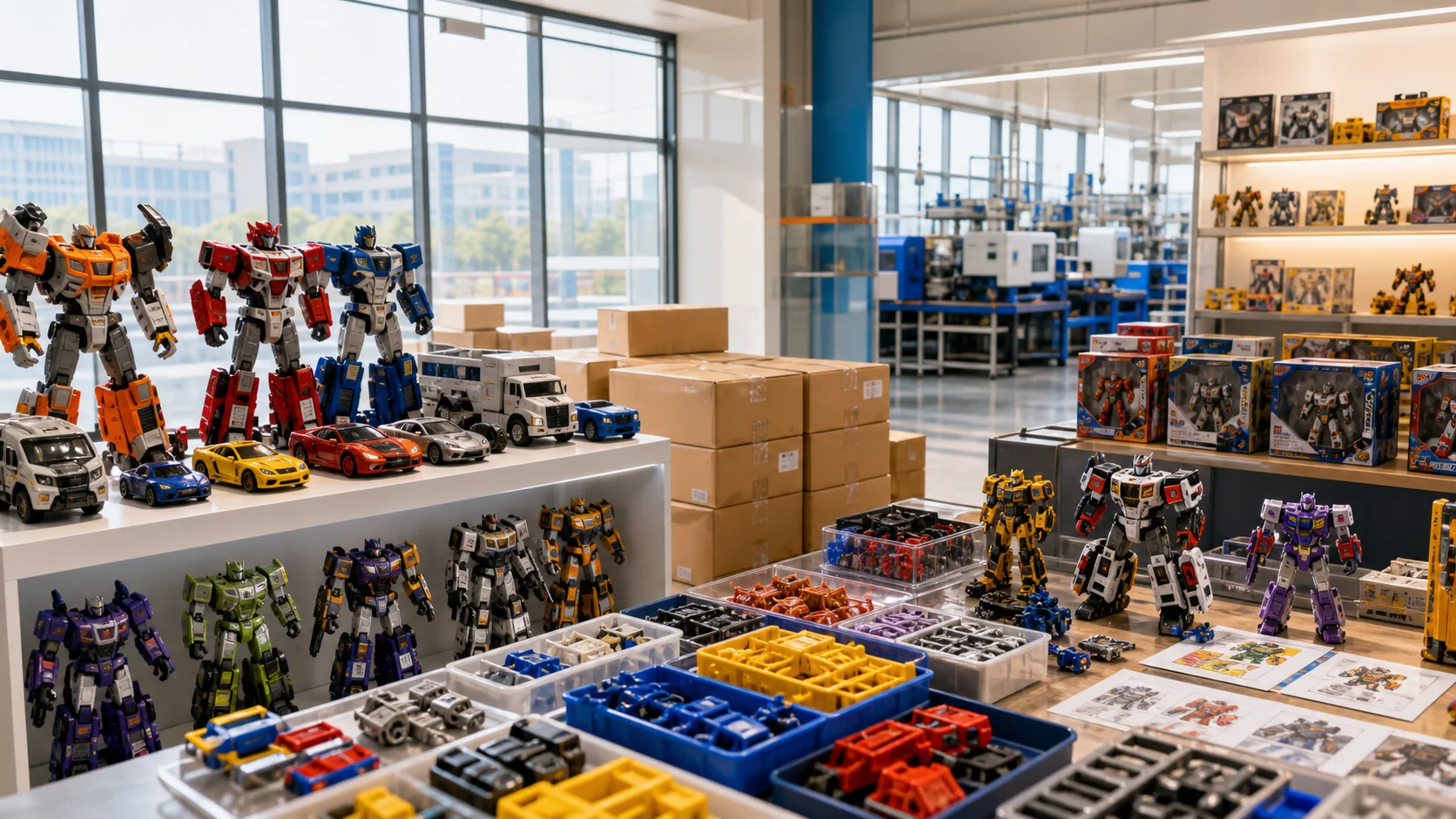
The difference between third-party and knockoff Transformers comes down to what was copied and what the seller claims. A third-party figure is usually independently engineered but inspired by a familiar character. A knockoff normally copies an existing toy’s mold, transformation or parts. A counterfeit tries to pass as the genuine branded product. Listings blur these labels, so the smartest buyer follows evidence—not the seller’s favorite word.
The mystery behind a cheap listing: two figures can look almost identical on a phone screen. One may be an original unlicensed design with excellent engineering; the other may copy a mold and arrive with weak joints. The label alone cannot tell you which box is worth opening.
Third-party vs knockoff Transformers at a glance
| Term | Practical meaning | What to verify |
|---|---|---|
| Official | Released by the rights holder | Official page and exact model number |
| Licensed | Made with permission | Named licensor and matching announcement |
| Third-party | Independently engineered, unofficial and inspired by an existing property | Original mold, honest branding and seller claims |
| Knockoff / KO | Copies much of an existing toy | Mold, transformation steps, accessories and packaging |
| Bootleg | Broad term for an unofficial reproduction | What was copied: toy, art, name or branding |
| Counterfeit | Presented as if it were genuine | Copied marks, identity and deceptive packaging |
| Unverified lookalike | Visually similar, with licensing not confirmed | Manufacturer, claims and exact design evidence |
| Reissue | Authorized later production of an older product | Rights holder, year and model number |
Official and licensed toys
An official toy comes directly from the rights holder. A licensed toy may be designed or manufactured by another company, but permission should be traceable through an official announcement, product page or named licensing statement.
A familiar logo is not enough. Record the exact product name and model number, then compare the box, accessories and colorway with an official source. Counterfeit packaging often depends on buyers recognizing the brand faster than they inspect the details.
What “third-party” means to collectors
In collector communities, third-party often means an unofficial figure built from new engineering to evoke a familiar character. It might offer a different scale, transformation or visual interpretation unavailable in the official line.
Third-party does not mean licensed. It also does not automatically mean low quality. Some third-party products are complex collector pieces; others are frustrating. The term describes the figure’s relationship to an IP, not whether its knees can hold a pose.
What KO Transformers means
KO is shorthand for knockoff. A KO may copy an official toy’s mold, resize it, change materials or add paint and accessories. OSKO generally means oversized knockoff.
That creates an uncomfortable value question. A KO can appear to offer more size and paint for less money, but savings may come with unknown materials, weaker quality control, incomplete instructions, no replacement support or unpredictable batch variation. Our upcoming three-toy knockoff Transformers quality test will compare those trade-offs on physical samples rather than repeat seller claims.
Bootleg, fake and counterfeit are not interchangeable
Bootleg and fake are broad conversational terms. Counterfeit is narrower: it suggests that a product is presented as genuine through copied branding, packaging or product identity.
Leo Toy Hunt does not call a toy counterfeit because its silhouette feels familiar. When a license cannot be verified, we use unverified lookalike and show the observable clues. That language is more accurate for readers and safer than making a legal conclusion from a listing photo.
Why do so many lookalike toys appear to come from Chenghai?
Because Chenghai is one of the world’s important toy-production clusters—not because every factory there makes fakes. According to the Shantou Industry and Information Technology Bureau, the district has a chain spanning raw materials, research, IP creation, manufacturing and trade. The Shantou Commerce Bureau describes local design, mold development, production, logistics and cross-border sales within a compact area.
That concentration lowers legitimate costs: a maker can find tooling, plastic parts, electronics, printing and shipping nearby. It also lowers the practical barrier for a bad actor to imitate a successful design and list it quickly. Demand for familiar-looking, low-priced toys gives those operators a market.
This does not make “Made in Chenghai” evidence of a fake. Chenghai is also home to original brands, licensed manufacturers and active IP protection. Shantou’s current toy-industry IP proposals include rapid rights support and coordinated enforcement.
Editorial illustration. A dense supply chain explains speed and price; it does not identify a product as licensed or counterfeit.
Is a knockoff better value than an official toy?
Sometimes in the narrow sense of size per dollar. Not always in the sense that matters after purchase.
Use a total-value check:
- Price: what did the exact delivered product cost, including shipping?
- Play: is the transformation understandable and worth repeating?
- Durability: do joints, tabs and paint survive normal handling?
- Trust: are the maker, age guidance, warnings and license claims clear?
- Aftercare: can you return a defective toy or replace a missing part?
An official toy may cost more partly because of licensing, distribution, testing, support and brand overhead. A budget toy may be excellent despite plain packaging. The answer requires hands-on evidence, which is why price alone never receives more than 20% of our score.
A five-minute listing check
Before buying, save screenshots and ask:
- Does the listing explicitly claim “official” or “licensed”?
- Is the manufacturer named, and does the delivered packaging match?
- Can the exact model be found on a rights-holder or licensee website?
- Are the photos of the actual toy or recycled promotional renders?
- Does the seller describe it honestly as third-party, KO or compatible?
- Are age guidance, warnings and returns clear?
Then read a review that shows the actual sample after repeated handling. Our transforming robot test method explains what useful evidence looks like, and the Leo Toy Hunt review standard covers our broader scoring rules.
Quick answers
Is third-party the same as fake?
No. Third-party usually means unofficial and independently engineered. “Fake” is too vague to explain whether a product copied engineering, branding, both or neither.
Can a knockoff be higher quality than the official toy?
It can add paint, size or accessories, but quality is model- and batch-specific. Better appearance does not prove better materials, durability or safety information.
Does “compatible” mean licensed?
No. Compatible usually describes fit or use. It is not evidence that the rights holder approved the product.
Is a Chenghai manufacturer automatically suspicious?
No. Chenghai’s complete toy industry includes original, licensed, OEM and other products. Judge the exact manufacturer, claim and physical toy.
What should I read next?
Continue to the three budget transforming robots test preview to see how these labels affect a real buying decision. The final update will reveal which compromise mattered most once all 60 transformation cycles are complete.
Leo Toy Hunt is independent and is not affiliated with Hasbro or Takara Tomy. Transformers is referenced descriptively.